
Rona Glynn Preschool is part of Ross Park Primary School and provides a play-based learning program that supports each child's individual strengths while fostering a strong sense of belonging and community.
We see children as capable, curious learners and encourage them to become confident thinkers, communicators, risk-takers, and respectful members of their community. Our learning environment promotes creativity, independence, and a love of learning.
The Resilience Project Early Years Program is embedded in our curriculum, helping children develop Gratitude, Empathy, Mindfulness, and Emotional Literacy to support positive wellbeing and resilience.
At Rona Glynn, we value strong partnerships with families, recognising them as children's first and most important teachers. We celebrate the rich cultural diversity of our community and create opportunities for families to connect through events and shared experiences.
Our educators are committed to continuous learning and work alongside children, families, and the wider Alice Springs community to provide meaningful learning opportunities. Through community events and our Bush Preschool Program, children learn on Country and develop a deep connection to the natural environment and the world around them.
Bilbies/ Aherte Group
Monday 8:15- 2:45
Tuesday 8:15 - 2:45
Echidnas/Inelange Group
Thursday 8:15 – 2:45
Friday 8:15 – 2:45
Bilbies/ Aherte Group & Echidnas/Inelange Group
Alternate Wednesdays 8:15 – 11:45
Rona Glynn Preschool is named after Rona Ellen Glynn, the first Indigenous teacher in Australia. Rona taught at Hartley Street School in Alice Springs from 1952-1954. Later in life, Rona became a midwife and returned to Alice Springs, delivering more than 2000 babies in the Alice Springs Hospital. In 1965, shortly after her death, Rona Glynn Preschool was opened in her honour.
The enrolment policy outlines the practice for accepting enrolments at the preschool and how the process is implemented. It takes into account changes introduced under the Australian Government Initiative, Universal Access, referenced below. NT Department of Education and Training (DET) Preschool Guidelines state
A child is eligible to begin preschool from the start of the school year if:
s/he is already 4 years old or
her/ his 4thbirthday is on or before 30th June of that year.
In the event of there being vacancies later in the year, children may be accepted to begin from the date of their 4th birthday of that year and would continue preschool for the whole of the following year.
Rona Glynn has a capacity for a maximum of 62 students, spread across 2 groups.
Priority Enrolment Criteria
When the number of students on the waiting list exceeds the Preschool’s capacity, the following criteria are used to determine which students will be offered a place:
the child has a sibling attending Ross Park School
the family’s home address is in our designated enrolment area (proof of residence may be required)
age of the child i.e.. older children on the waiting list have priority.
The final decision about the offering of positions at Rona Glynn Preschool when the waiting list exceeds the number of places, rests with the Principal of Ross Park Primary School.
Enrolment Expressions of Interest List
EnrolNow simplifies preschool enrolment by providing an online platform that automates the application and registration process. It streamlines the journey from expression of interest lists to position offers, allowing parents to submit details electronically, receive automated offer emails, and complete enrolment forms. Click on the button on this website to begin the enrolment process.
Enrolment Confirmation
During Term 3, families who have placed their name on the Expression of Interest list and who meet the criteria will be contacted in writing and offered a place for the following school year. Families need to complete the NT DET enrolment form in order to confirm their acceptance. Where possible, families are offered a choice of group for their child. Parents are asked to contribute $280 per year which can be paid to the preschool or through the school. Bank details are as follows:
Where there are too many children on the Expression of Interest list, those families who do not meet the criteria will be notified that they are not able to be enrolled and will be advised to contact other preschools. Thes students may remain on the Expression of Interest list in case of a vacancy.


Children who turn 4 years old on or before June 30th will usually complete one year of preschool and move into Transition at school after this. In some cases, students will complete a second year of preschool. Decisions around this are made by the family with input from Preschool and School staff. Children who turn 4 after June 30th will continue in preschool for another full year and commence Transition at the beginning of the year after that.
All enrolled students at Rona Glynn’s automatically continues on to Ross Park’s Transition classrooms. For a number of years, the demand for enrolments at Ross Park has necessitated the implementation of a Priority Enrolment Policy. This is due to Ross Park Primary School being at capacity for the classroom space available. This policy guarantees entry to students living within our Priority Enrolment Area and allows others to enrol, subject to capacity, special circumstances and/ or School Council consideration.
You are eligible to enrol your child at Ross Park Primary School when:
two forms of proof of residence within our Priority Enrolment Area are provided or
your child’s siblings attend the school
The principal, in consultation with Ross Park School Council, has discretion for enrolments outside of these situations under the special considerations within the policy.
A map of Ross Park’s Priority Enrolment Area is available in the school office and on the website: Alice Springs Primary Schools Priority Enrolment Maps – Google My Maps
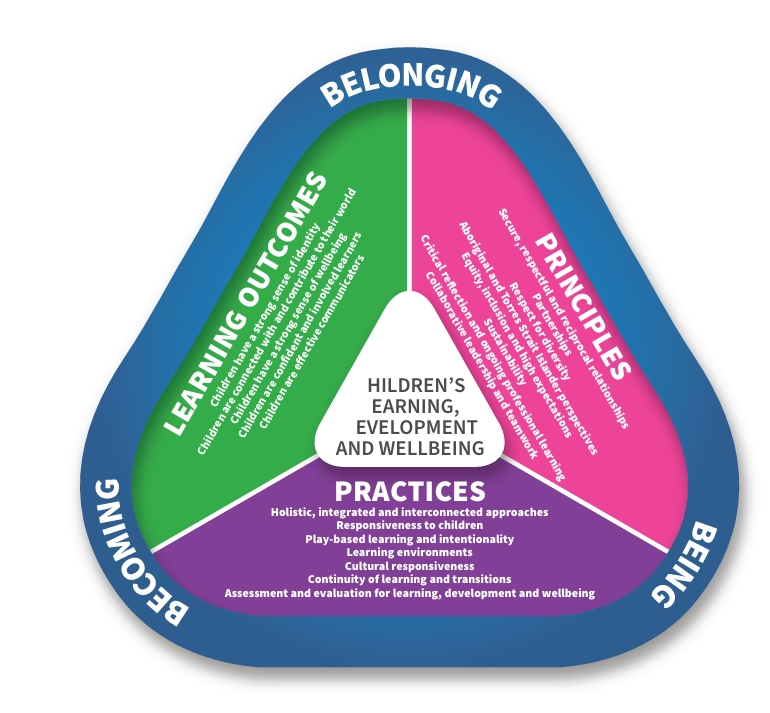
At Rona Glynn Preschool, our learning program is guided by the Early Years Learning Framework (EYLF v2.0) and the NT Preschool Curriculum. These frameworks support children to build the skills, knowledge, and confidence needed for future learning through play-based experiences that promote communication, literacy, numeracy, and social-emotional development.
Central to our approach are the concepts of Belonging, Being and Becoming:
Belonging – developing strong connections with family, culture, community, and place.
Being – valuing childhood as a time to play, explore, and enjoy learning in the present.
Becoming – supporting children's growth as they develop their identity, skills, and understanding of the world.
Our program places children at the centre of learning, with educators creating engaging experiences that nurture each child's development and wellbeing.